

Insects that goes through adult stage without becoming pupa are except ________
- A. crickets
- B. cockroach
- C. grasshopper
- D. bees

How does an enzyme affect the rate of a reaction?
- A. It lowers the activation energy of the reaction, increasing the reaction rate.
- B. It raises the activation energy of the reaction, decreasing the reaction rate.
- C. It lowers the activation energy of the reaction, decreasing the reaction rate.
- D. It raises the activation energy of the reaction, increasing the reaction rate.
In mosses the structure which performs the function of water absorption is the _________?
- A. root hairs
- B. rhizoids
- C. capsule
- D. hyphae
Which of the following factors can reduce the population of a community?
- A. Immigration
- B. edaphic
- C. predation
- D. mutualism
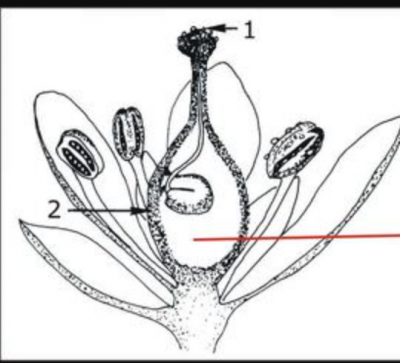
Use the diagram to answer the question that follows
The part labelled 1 is the ________
- A. carpel
- B. sepal
- C. petal
- D. stigma
The host of liver fluke are ______?
- A. pig and snail
- B. pig and sheep
- C. sheep and snail
- D. pig
Carbon (iv) oxide is added to the atmosphere when ________?
- A. plants build-up organic compounds
- B. plants absorb mineral salts
- C. sugars are completely broken down in animals
- D. there is thunderstorm
The most efficient respiratory structure used by free living protozoan is ________
- A. body surface
- B. gills
- C. buccal cavity
- D. spiracle
Gregor Mendel is regarded as the father of ______
- A. variation
- B. genetics
- C. mycology
- D. natural selection
Erythrocytes are known as ________
- A. white blood cell
- B. red blood cells
- C. phagocytes
- D. leucocytes
The key event in the transition of the amphibians from water to land is the ________
- A. replacement of the gills with lungs
- B. possession of webbed limbs
- C. limbs
- D. possession of tympanic membrane
Which of the following is an example of active transport?
- A. Oxygen exchanging between red blood cells and liver cells
- B. Carbon dioxide exchanging between muscle cells and red blood cells
- C. Water moving out of the small intestine
- D. Sodium being reabsorbed in the kidney
The lungs of the lung fish is an adaptation for respiration _______?
- A. to complement gills while in water
- B. to complement gills while on land
- C. while on land
- D. while in water
The possession of scales, laying of eggs with shells and bony structure of the head are characteristics shared by
- A. birds and reptiles
- B. fishes and birds
- C. reptiles and fishes
- D. birds and molluscs
The product after the union of the male and female gamete in animals is called
- A. sperm
- B. egg
- C. embryo
- D. zygote
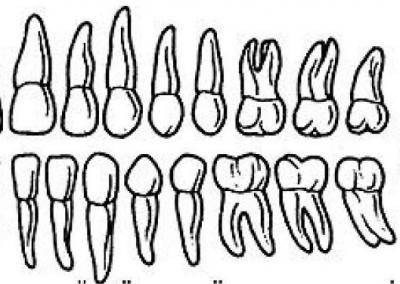
Use the diagram to answer the question that follows
The structure is adapted for
- A. omnivores
- B. herbivores
- C. canivores
- D. omnivores and canivore
The difference in structure, morphological and behavior of plant and animal is called
- A. adaptation
- B. evolution
- C. variation
- D. succession
The protista that is a producer in an aquatic food chain is
- A. trypanosome
- B. paramecium
- C. chlamydomonas
- D. amoeba
The appendicular skeleton includes
- A. pectoral and pelvic girdles
- B. forelimbs, skull and pectoral girdle
- C. lungs and ribs
- D. skull and the vertebral column
The level of organization of Amoeba and Euglena cell is
________?
- A. organ
- B. system
- C. cell
- D. tissue
Which of the following is a characteristics of a bacteria except _______?
- A. they can be seen under microscope
- B. they range from 0.5 µ m in diameter
- C. They are grouped accordingly to their cell shape
- D. they do not cause disease