

(a)(i) With the aid of a labelled diagram describe the mode of operation of a modern X-ray tube.
(ii)State the energy transformations that take place during the operation of the X-ray tube.
(b) Define, as applied to X-rays, the following terms:
(i) hardness;
(ii) intensity.
(c) State (i) four uses of X-rays;
(ii) one hazard of over-exposure to X-rays in a radiological laboratory.
Explanation
(a)(i)
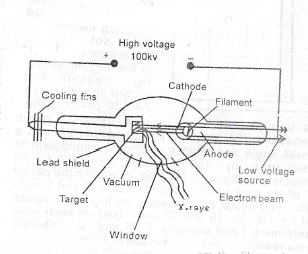
Thermally generated electrons from the filament are accelerated through high P.d and focused by the focusing cathode to a target. The energy of the impending electrons is converted mostly into heat which conducted through the copper anode. A small percentage of the energy is converted into X-rays which are radiated from the target through the window.
(ii) Energy transformation:

(b)(i) Hardness is the strength or penetrating power of the x-ray.
(ii) Intensity is the energy radiated per unit time per unit area.
(c)(i) Uses of x-rays:
- Cure of cancer
- Radio therapy
- Detection of fracture in bones
- Radiography
- In metals to detect defect and fractures
- In agriculture to kill germs
- Analytical tool in crystallography
- To detect metallic weapons
(ii) Hazzards of over-exposure to x-rays; causes
- leukemia
- tissue damage
- cataracts
- skin burn or cancer
- genetic mutations with undesirable heredity
- baldness
- graying.