








ANSWERS
Question 1:
What are the three basic aspects of human personality according to Sigmund Freud’s psychological explanation?
Answer:
1. Id: The primitive aspect of human personality that is not in touch with reality.
2. Ego: (Incomplete in the text, but typically defined as the rational part of the personality that mediates between the id and superego.)
3. Super-ego: Contains the psychic agency (“seat of all human conscience”), spiritual goals, aspirations, and feelings of guilt for wrongdoing. An overdeveloped or underdeveloped superego is linked to criminal behavior.
—
Question 2:
How does Strain Theory (Merton) explain criminal behavior?
Answer:
Strain Theory posits that people experience strain or stress when they have goals but lack the means to achieve them. This frustration may lead them to engage in crime (e.g., stealing to alleviate financial problems) as a way to cope with their unmet aspirations.
—
Question 3:
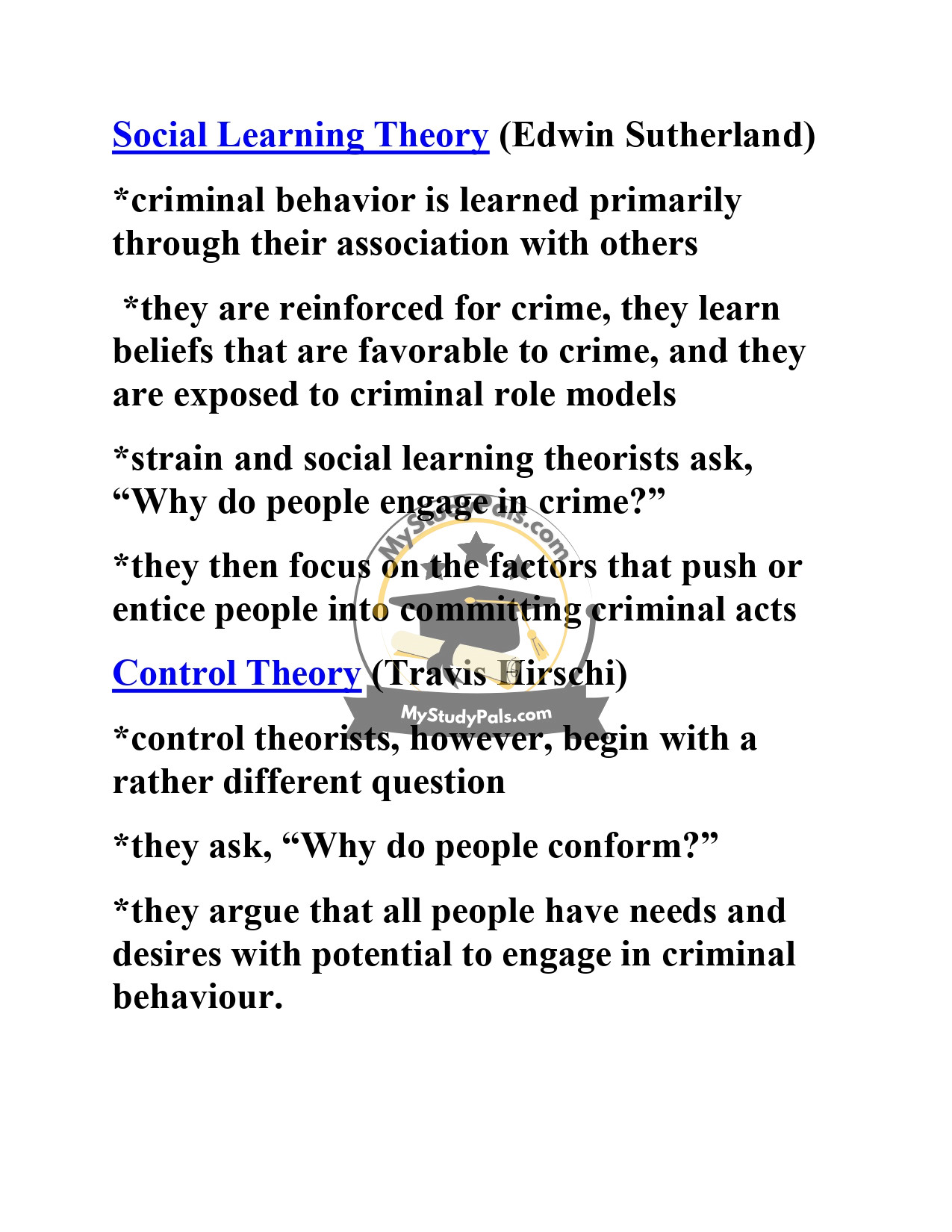
What is the core argument of Social Learning Theory (Edwin Sutherland) regarding criminal behavior?
Answer:
Criminal behavior is learned primarily through association with others. Individuals are reinforced for crime, exposed to criminal role models, and adopt beliefs favorable to crime. The theory focuses on how social interactions push or entice people into criminal acts.
—
Question 4:
How does Control Theory (Travis Hirschi) differ from other sociological explanations of crime?
Answer:
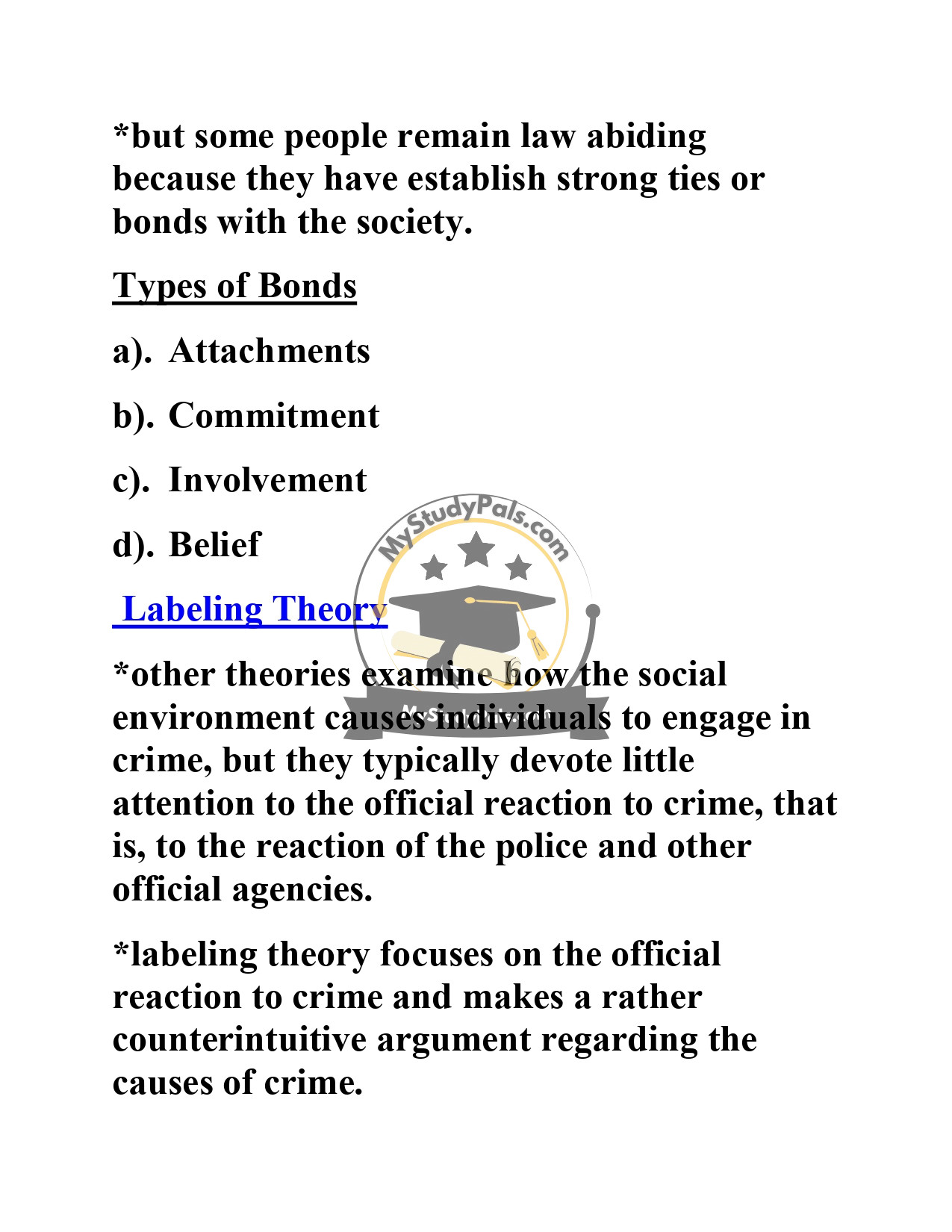
Control Theory asks, “Why do people conform?” instead of “Why do people commit crime?” It argues that people remain law-abiding when they establish strong social bonds (attachments, commitment, involvement, and belief). Weak bonds increase the likelihood of criminal behavior.
—
Question 5:
What is the focus of Labeling Theory in criminology?
Answer:
Labeling Theory examines how official reactions (e.g., police, societal rules) define acts as deviant. It argues that deviance is not inherent but depends on which rules society enforces, in which contexts, and for which people. Labels can perpetuate criminal identity.
—
Question 6:
What are the key elements of Classical Criminology?
Answer:
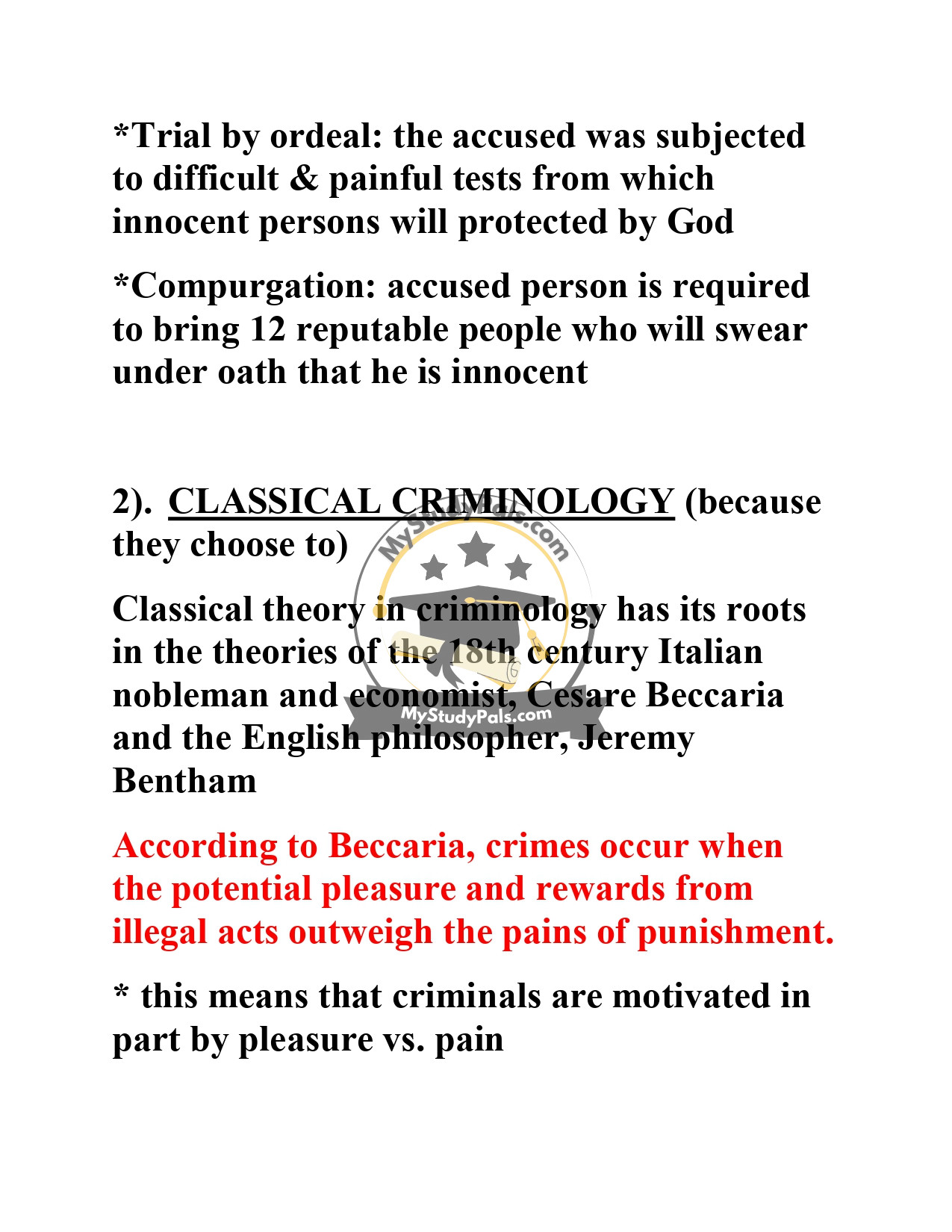
1. People have free will to choose criminal or lawful solutions.
2. Crime is attractive when it offers high rewards with minimal effort.
3. Crime can be deterred by punishment that is swift, certain, and proportionate.
—
Question 7:
What did Cesare Lombroso claim about “born criminals” in Positivist Criminology?
Answer:
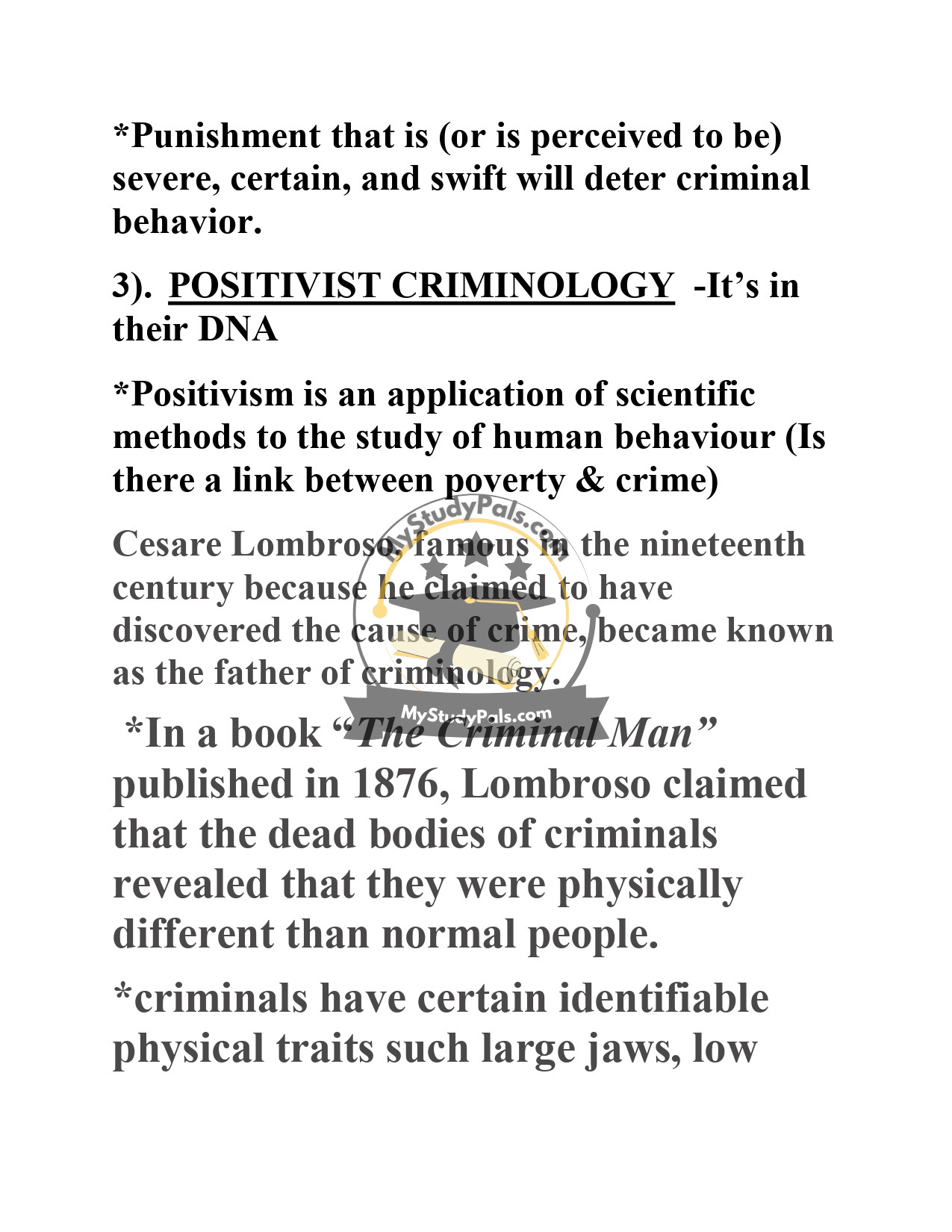
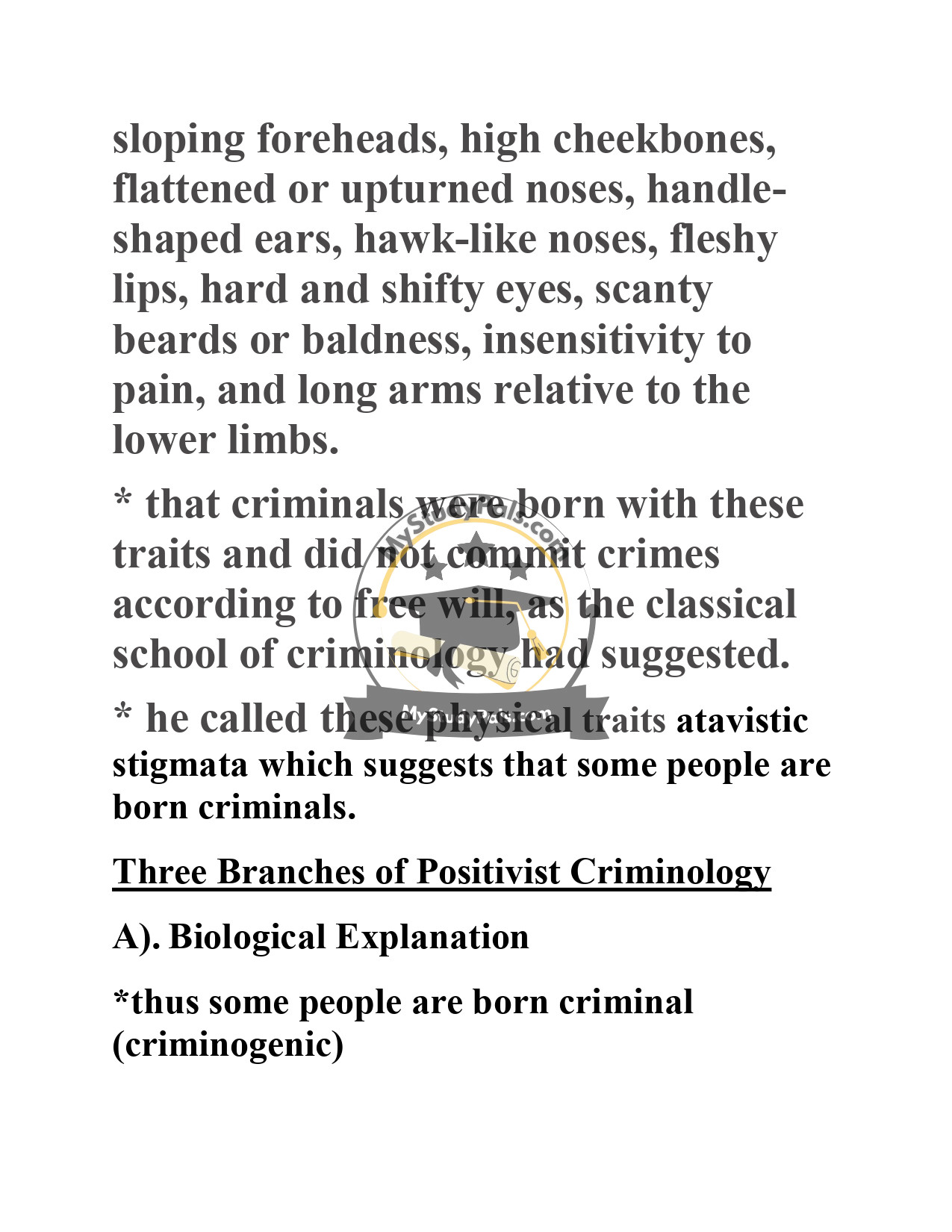
Lombroso argued that criminals are biologically distinct, with physical traits like large jaws, sloping foreheads, and hawk-like noses (“atavistic stigmata”). He believed these inherited traits predisposed individuals to crime, rejecting free will.
—
Question 8:
What controversial solution did Biological Positivism propose for inherited criminal behavior?
Answer:
Eugenics—preventing “born criminals” from procreating to eliminate criminal traits. Other solutions included education, rehabilitation, and capital punishment.
—
Question 9:
How did Witkin (1976) link chromosomes to criminal behavior?
Answer:
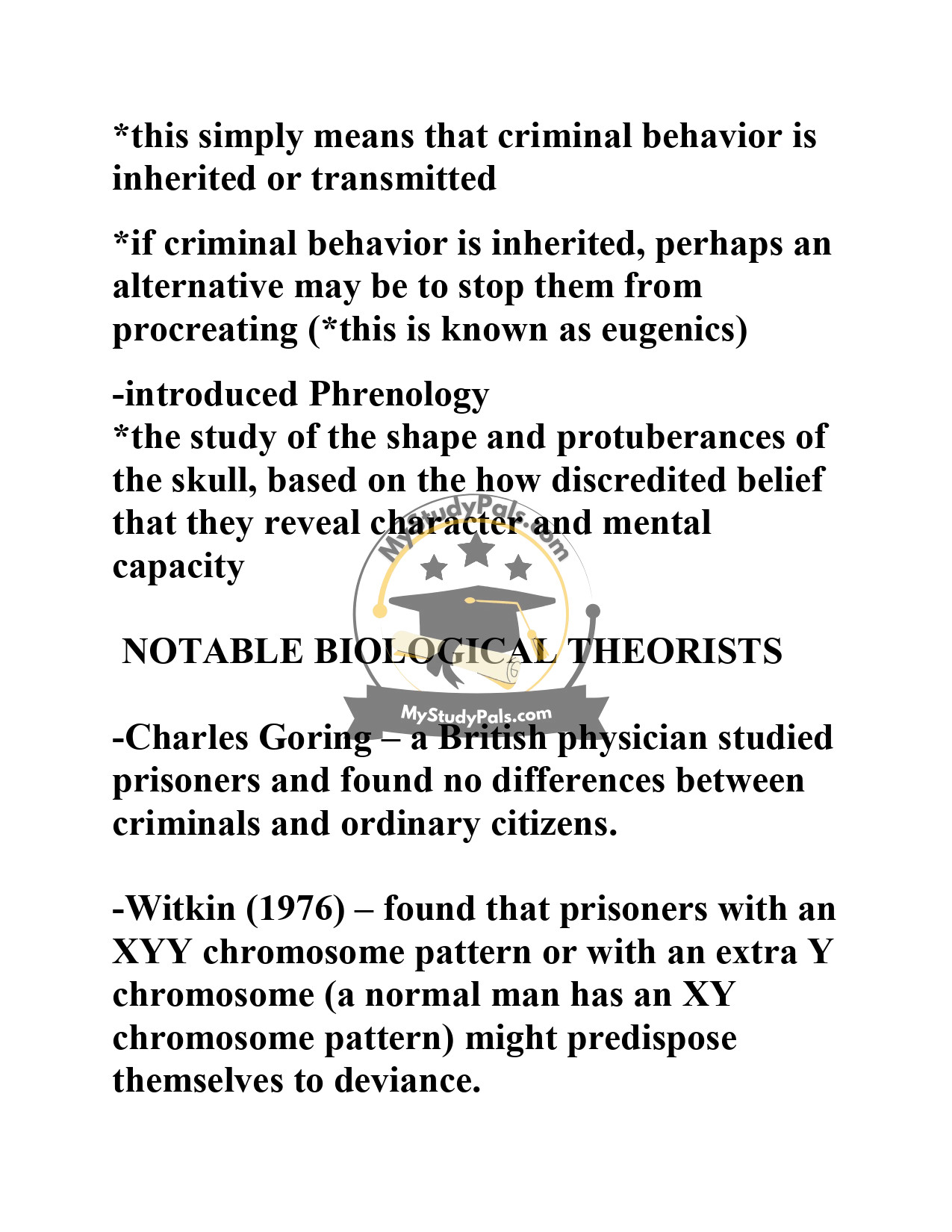
Witkin found that men with an XYY chromosome pattern (extra Y chromosome) might be predisposed to deviance due to lower intelligence and higher likelihood of being caught.
—
Question 10:
What is phrenology, and how was it discredited?
Answer:
Phrenology studied skull shape to determine mental capacity and character. It was discredited as pseudoscience when researchers like Charles Goring found no physical differences between criminals and non-criminals.